New e-cigarette: real upgrade or just a restyle?
Every month, British retailers open a fresh row of listings for a new e-cigarette announced as a major step forward. In reality a good share of those releases change the colour of the chassis or the artwork on the screen and very little else. Here are the concrete criteria that separate a genuine technical jump from a facelift, and the three specifically British reasons the word new gets used more loosely here than almost anywhere.
New e-cigarette: the question to ask before any spec sheet
Before looking at the advertised wattage or the design, only one question counts: what changed inside, not around. Three elements define a real evolution: the coil platform, the chip that regulates the heat, and the format that dictates how the device is used.
A new colourway, a redrawn dial or a bigger screen answers none of those three. They are aesthetic choices, commercially legitimate, but they do not justify the word generation.
That distinction is directly useful at the point of purchase. Replacing a working device for a restyle means paying for the same product under another name, which is a decision worth making deliberately rather than by accident.
The coil platform, the criterion that does not lie
This is the most reliable way to judge a release, because it touches the delivery in the mouth and the rate at which liquid is used. A manufacturer introducing a new coil platform changes the wicking, the structure of the mesh and usually the recommended wattage band.
One signal is dependable. A coil advertised as compatible with the same brand’s previous range generally does not belong to a new platform. Serious manufacturers publish a distinct reference when the wick or the internal structure genuinely changes.
The reverse is just as telling. A device sold as new that carries over the exact coil reference of an earlier model reconducts the same technical base. The shell changed, not the part that makes the vapour, and it is worth comparing coil families across a range rather than comparing chassis.
The chipset, often invisible and always decisive
The chipset manages power regulation, cell protection and the heating modes available. It is the least visible line on a product page, and the one that most sharply separates two generations of device.
A chipset change shows up as new modes appearing, whether that is automatic resistance detection, configurable power curves or finer control over the ramp, or as steadier voltage across the length of a draw.
Some brands reuse the same chip across several successive bodies, changing only the interface or the screen. In that case the vaping experience is unchanged, whatever the packaging announces. A range built around one long serving chip platform illustrates the point: the position of the device moved, the electronics did not.
Format and ergonomics: where a real change begins
Format is judged on use rather than raw performance. A genuine change of format alters how the device is held, whether it works with cells you already own, or how the liquid capacity is reached.
Moving from a two cell mod to a compact body with its own built in battery is a real change of use, not just of silhouette. It happens when a range shifts from an experienced audience to a wider one, in exchange for less runtime and no repairability at the battery.
The same chassis reissued in three colours with a repositioned logo changes neither the handling nor the hardware compatibility. That is a restyle, useful commercially and inconsequential to the vape itself, as the gap between a large battery pod mod and a slim pod shows straight away.
Three British reasons the word new means less here
This is where a British buyer needs a different reading grid from the one that works elsewhere, and it is the part no product page will set out.
The first reason is capacity and strength. MHRA guidance for consumer e-cigarettes caps a nicotine containing tank or pod at 2 ml, refill containers at 10 ml and nicotine strength at 20 mg per ml. None of those three figures can ever be the innovation in a British release, so manufacturers advertise elsewhere.
The second is the disposables ban. Selling or supplying single-use vapes became illegal on 1 June 2025 under the Environmental Protection (Single-use Vapes) (England) Regulations 2024. British shops now list rechargeable prefilled pod kits in puff count tiers where disposables used to sit, and a great many of those arrived as new products that are in truth a compliant repackaging of an existing format.
The third is coming to the packaging itself. HMRC applies Vaping Products Duty from 1 October 2026, with duty stamps required on all vaping products outside duty suspension from 1 April 2027. Boxes will change visibly on that timetable, across products whose internals have not moved at all. A restamped box is not a new device.
The signals that give away a marketing restyle
Certain clues turn up systematically on the listing for a new e-cigarette that is not really one. Spotting them stops you paying for a cosmetic update at the price of an innovation.
First signal: the specification is identical to the previous model apart from weight or dimensions differing by fractions of a millimetre. Second signal: the copy leads with design and colourways before any heating or runtime characteristic.
Third and more technical: the recommended coil carries the same reference as the earlier model. If the wick and the heating structure have not changed, neither has the delivery.
A last useful marker is the vocabulary the manufacturer uses about itself. A statement that talks about a new edition or a new finish is generally admitting the absence of a technical break, unlike one that details a new chip or a new coil platform.
How to check for yourself before buying a new e-cigarette
The most reliable method is to compare three precise data points between the old model and the new one: the recommended coil reference, the name of the chipset, and the available wattage or voltage range.
If all three match the previous model, the device is a variant rather than a distinct generation. If at least two of them differ, there is a real technical evolution worth your attention.
This grid applies equally to mods and to pods. The renewal of a range such as the Centaurus family is judged exactly the same way: coil platform, chipset, then format, in that order of priority.
Frequently asked questions
How do I know whether a device really changes chipset?
The manufacturer’s specification usually names the chip. Comparing that name with the previous model settles it. Where no name is given, the appearance of new heating modes is an indirect indicator.
Does a new colourway mean a new generation?
No. A colour or a redrawn design changes neither the chipset nor the coil platform. It is an aesthetic choice with no bearing on the delivery or the runtime.
Is coil compatibility a good indicator?
Yes, it is one of the most reliable. If the recommended coil carries the same reference as an earlier model, the heating structure has generally not changed at all.
Should I replace my device at every announced release?
Not automatically. A new commercial reference does not always mean a technical change. Checking the chipset, the coil platform and the format before replacing a device that still works avoids unnecessary spending.
Do manufacturers announce genuine technical breaks clearly?
It varies. Some detail the new chip and the new platform in the launch material. Others lead with design, which is often the sign of a change that is more cosmetic than technical.
New e-cigarette: the reading grid to keep
Faced with a new e-cigarette on a British listing, three questions are enough to settle it: has the coil platform changed, is the chipset different, and does the format genuinely alter how the device is used. If the answer is no to all three, it is a restyle.
That grid keeps product communication and technical progress apart. It applies to every range on the market, whichever manufacturer is being pushed in a given season, and it holds regardless of how the shelf is reorganised around it.
British shelves in particular are due to move again on the duty and stamps timetable, which will refresh a great deal of packaging without refreshing what is inside. Keeping those three criteria in mind is how you follow releases without being led by the box, and it is the cheapest habit a new e-cigarette buyer can adopt.
Editorial content for adult readers only. Vaping products usually contain nicotine, a substance that causes addiction. Not for sale to under-18s in the United Kingdom. This article is not a buying recommendation.
Further reading
 New releases
 Lost Vape Thelema: how the range has shifted
Solo 100 Pro, Q200 Pro, Elite 40, Nano: the Lost Vape Thelema range has tilted towards compact kits and now shares consumables with Centaurus.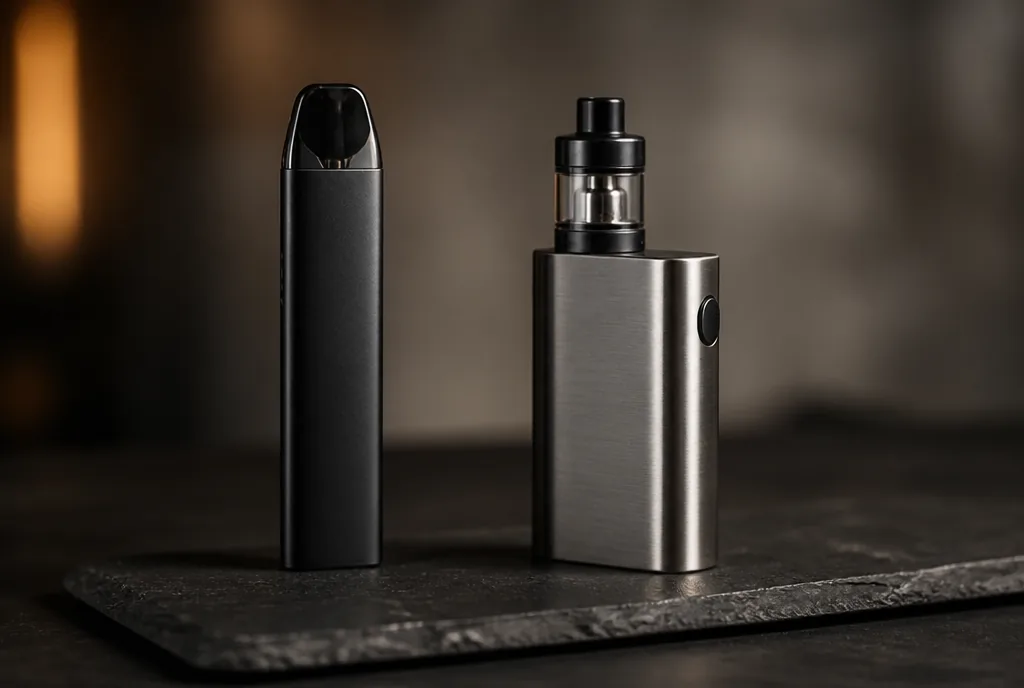 New releases
 Vaporesso Armour G: the 80 W pod mod today
The Vaporesso Armour G is still stocked across Britain. Battery, 2 ml pod, GTX coils and the G against GS naming: what actually matters now.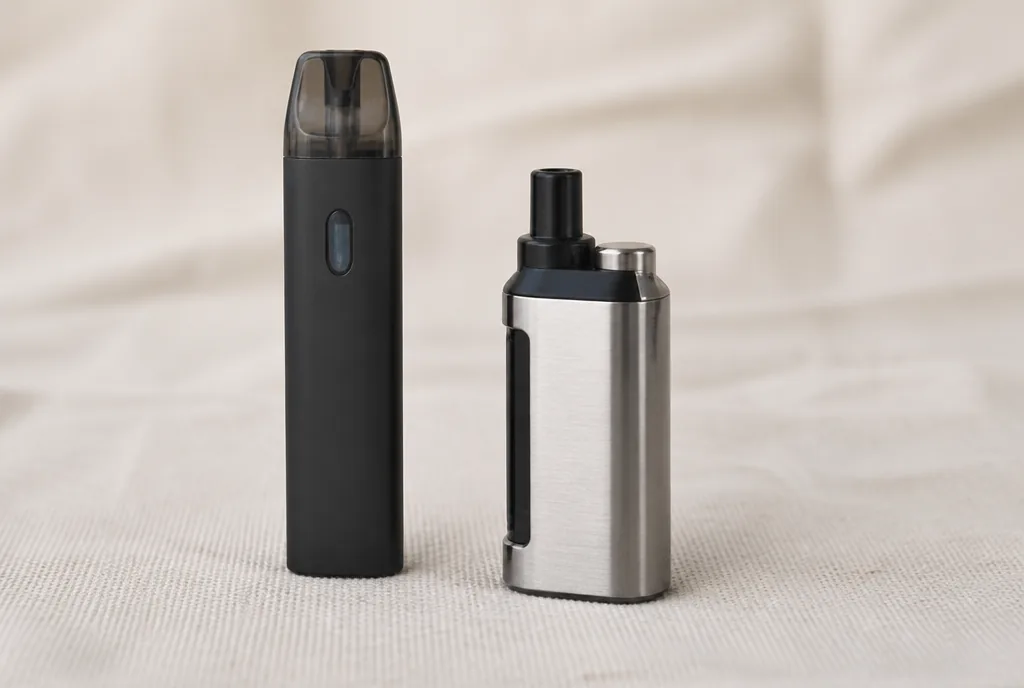 Trends