Lost Vape Thelema: how the range has shifted
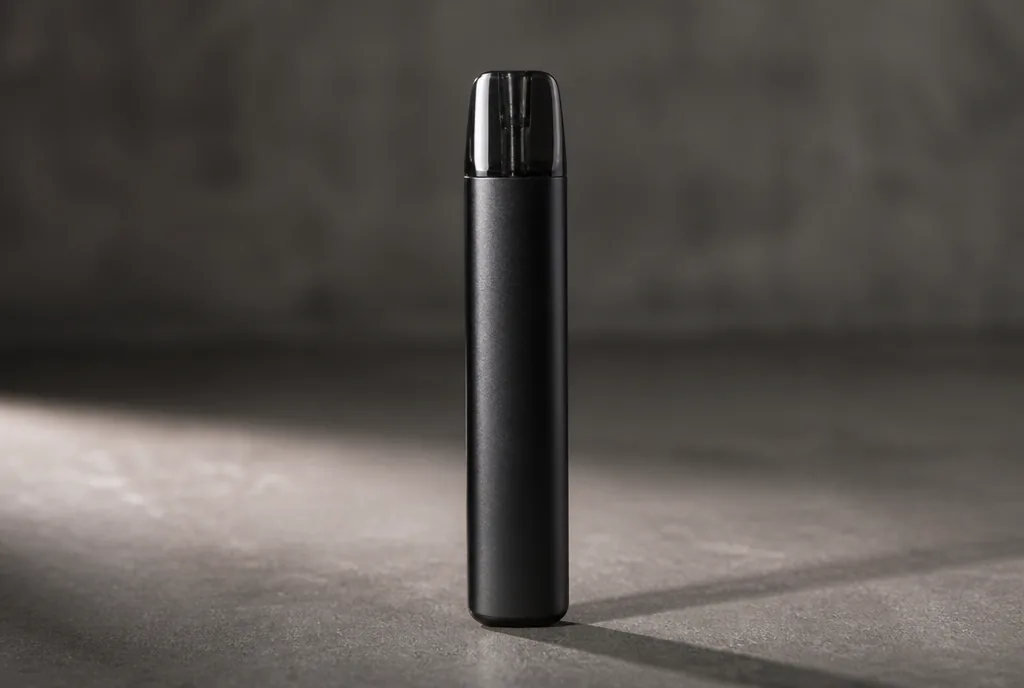
Two years after the Thelema Solo settled in as a safe single cell choice, Lost Vape Thelema no longer reads like a range of box mods. Compact kits with built in batteries now take up most of the shelf space in British shops, and the family has quietly stopped being sealed off from its sibling range. The centre of gravity moved without anyone announcing it.
Lost Vape Thelema: what the UK line-up looks like now
British specialists list the range in two clear halves. On the removable cell side sit the Solo 100 W mod, the Solo 100 Pro and the dual cell Q200 Pro. On the compact side sit the Elite 40, the Elite S, the Elite Art and the Nano.
The tilt is unmistakable. Four of the current references have a built in battery, and the busiest ones hover between 40 and 45 W. Climbing the power ladder is no longer the development axis of this family.
That matters more than it sounds, because it changes who the range is aimed at. A line that once spoke to mod owners now speaks to everyday carry first, with the mods kept on for the vapers who already own tanks.
The Solo 100 Pro takes the lead on removable cells
This is the reference that moved most recently, and it does more than staple a Pro badge onto an older chassis. The change is electronic before it is cosmetic.
The chip moves up to Quest X 3.0, where the original Solo 100 W was built on Quest 2.0. UK listings quote adjustable wattage with the usual temperature control wire types, and the screen becomes configurable rather than fixed.
The format stays faithful to what came before. A single bay takes an 18650 or a 21700, never supplied, with a 510 thread on top and a removable battery cover. In kit form British retailers pair it with the Centaurus V2 tank rather than a Thelema branded one.
The Solo 100 W has not gone anywhere
The previous generation is still on the shelf, and it is still the richer one on a specific point, which is why it deserves a separate look before you settle anything.
Where the Pro leads on interface and personalisation, the original mod leads on the breadth of its heating modes. Variable voltage, a power curve, a bypass mode that imitates a mechanical device and temperature control across several wire types all sit on the same chip, with memorised profiles.
In other words, the older reference remains the more complete one for anyone who genuinely fine tunes. The Pro is betting on legibility and on a screen you can make your own, not on the length of the mode list.
Elite 40, Elite S and Nano: the compact half
The compact kits are the part of the range that a French or European buyer will not recognise from a UK product page, because the naming is simply different here. What British shops stock is the Elite 40, the Elite S, the Elite Art and the Nano.
The Elite 40 runs a 1400 mAh built in battery and is described for mouth to lung and restricted direct lung use. There is no 510 thread and no coil to screw in. Everything happens inside an E-Plus pod that clips in and fills from the side.
The Elite S and the Elite Art are the same idea with different panel treatments, which is worth knowing before paying a premium for what is essentially artwork. The Nano moves up to a 1500 mAh cell in the most compact body of the four.
Alongside them, a Mini kit sold by several British retailers keeps a 510 thread and a UB Lite tank, listed at 2 ml as UK rules require. That is the one to look at if you want a compact device but refuse to give up choosing your own tank.
The split in philosophy is total. The Mini lets you pick tank, coil and mouthpiece, while the Elite kits enclose the whole heating end in a pod. The first costs a little in consumables each month, the second buys back handling time.
That division of roles explains why both stay in the catalogue instead of replacing one another. These are not two generations, they are two audiences.
The real change: shared consumables across two ranges
Here is the point product pages never state, and it weighs more than any chip revision. The brand’s two flagship families are no longer watertight.
The E-Plus pod used by the Elite kits is also listed for the Centaurus E40 and E40 Max, and a rebuildable E-Plus cartridge exists for vapers who prefer to build. Running the other way, the Solo 100 Pro and the Q200 Pro ship in kit form with the Centaurus V2 tank and the brand’s UB mesh coils.
The consequence in a British shop is concrete. A vaper equipped in either family finds consumables in the other one. That is not a marketing detail, it is what secures supply three years out. The wider context of that second family sits in our overview of the Centaurus range.
What to check before buying a Lost Vape Thelema today
All the references sit at the same retailers, at prices that do not follow release order. Three checks avoid the common mistake.
The exact name first. Solo 100 and Solo 100 Pro are two different chips, and only the word Pro signals it. The recharging arrangement second, since a compact kit with a sealed battery cannot be rescued with a spare cell in a pocket.
The consumable family last, and it is the one that binds you. E-Plus pods, UB Lite coils and UB mesh coils are not interchangeable, and that choice commits you far more than the chassis does. A comparable trade off shows up on compact pods with fixed cartridges and on big battery pod mods.
Frequently asked questions
Does the Solo take a 21700 cell without an adapter?
Yes, the bay is dimensioned for it. The adapter supplied in the box works the other way round, seating a narrower 18650 in the same compartment without play.
Is bypass mode genuinely useful?
It lets output track the remaining charge, in the manner of a mechanical device. It is a curiosity of feel rather than a technical advantage in ordinary daily use.
Can these devices be used while charging?
The USB-C port allows it, but the charging circuit and the discharge circuit then work at the same time. Occasional use passes, habit is better avoided.
How long does an E-Plus pod last?
Its life depends on the liquid and the wattage used, never on a fixed number of days. Fading flavour, then a burnt taste, mark the end of its useful life.
Why can UK pods not hold more liquid?
Because MHRA guidance for consumer e-cigarettes caps a nicotine containing tank or pod at 2 ml, refill containers at 10 ml, and nicotine strength at 20 mg per ml. Every compliant UK listing works within those figures.
A range that is tightening around the compact end
The movement is clear. Lost Vape Thelema keeps two removable cell mods for existing owners and concentrates its newer references on sub 50 W formats with built in batteries, sold as everyday carry rather than as platforms.
Shared consumables with the Centaurus family finish the job, turning two separate catalogues into one ecosystem. That convergence has become the norm among established manufacturers, and it benefits the buyer who keeps a device for several years above anyone else.
One date is worth pencilling in alongside all of this. HMRC has confirmed Vaping Products Duty from 1 October 2026, with duty stamps required on vaping products outside duty suspension from 1 April 2027, so British listings will shift again. Judge a Lost Vape Thelema kit on its consumables rather than its badge and that shift changes very little for you.
Editorial content for adult readers only. Vaping products usually contain nicotine, a substance that causes addiction. Not for sale to under-18s in the United Kingdom. This article is not a buying recommendation.
Further reading
New e-cigarette: real upgrade or just a restyle?
Coil platform, chipset, format: how to tell a genuinely new e-cigarette from a restyle, and what British rules change about the word new. New releases
 Vaporesso Armour G: the 80 W pod mod today
The Vaporesso Armour G is still stocked across Britain. Battery, 2 ml pod, GTX coils and the G against GS naming: what actually matters now. Trends